

PUP Latin Honors: The 30-Second Answer
If you’re a PUP student checking whether your grades qualify, here are the official cutoffs from the PUP Student Handbook:
- Summa Cum Laude: GWA of 1.0000 to 1.1500
- Magna Cum Laude: GWA of 1.1501 to 1.3500
- Cum Laude: GWA of 1.3501 to 1.6000
But the GWA is only half the story. PUP also disqualifies candidates with any final grade below 2.5, any incomplete or dropped subject, or any delayed graduation — even if the average itself is within range. The full rules are below, plus a worked example so you can compute exactly where you stand.
Here’s a look at what a PUP Latin honors graduation ceremony actually looks like:
What Are PUP Latin Honors?
PUP Latin honors are the academic distinctions the Polytechnic University of the Philippines awards to graduating students with outstanding weighted averages: Summa Cum Laude (highest), Magna Cum Laude, and Cum Laude.
They’re printed on your diploma, announced at graduation, and — let’s be honest — they carry real weight on a resume in the Philippines, where employers and grad schools know exactly how hard these are to earn at PUP.
PUP is known for strict grading. A 1.50 at some universities barely raises an eyebrow; at PUP, the difference between Magna and Cum Laude can come down to a single 1.75 in a 3-unit subject freshman year.
That’s why understanding the exact cutoffs — and the disqualification rules most students only discover too late — matters from day one, not senior year.
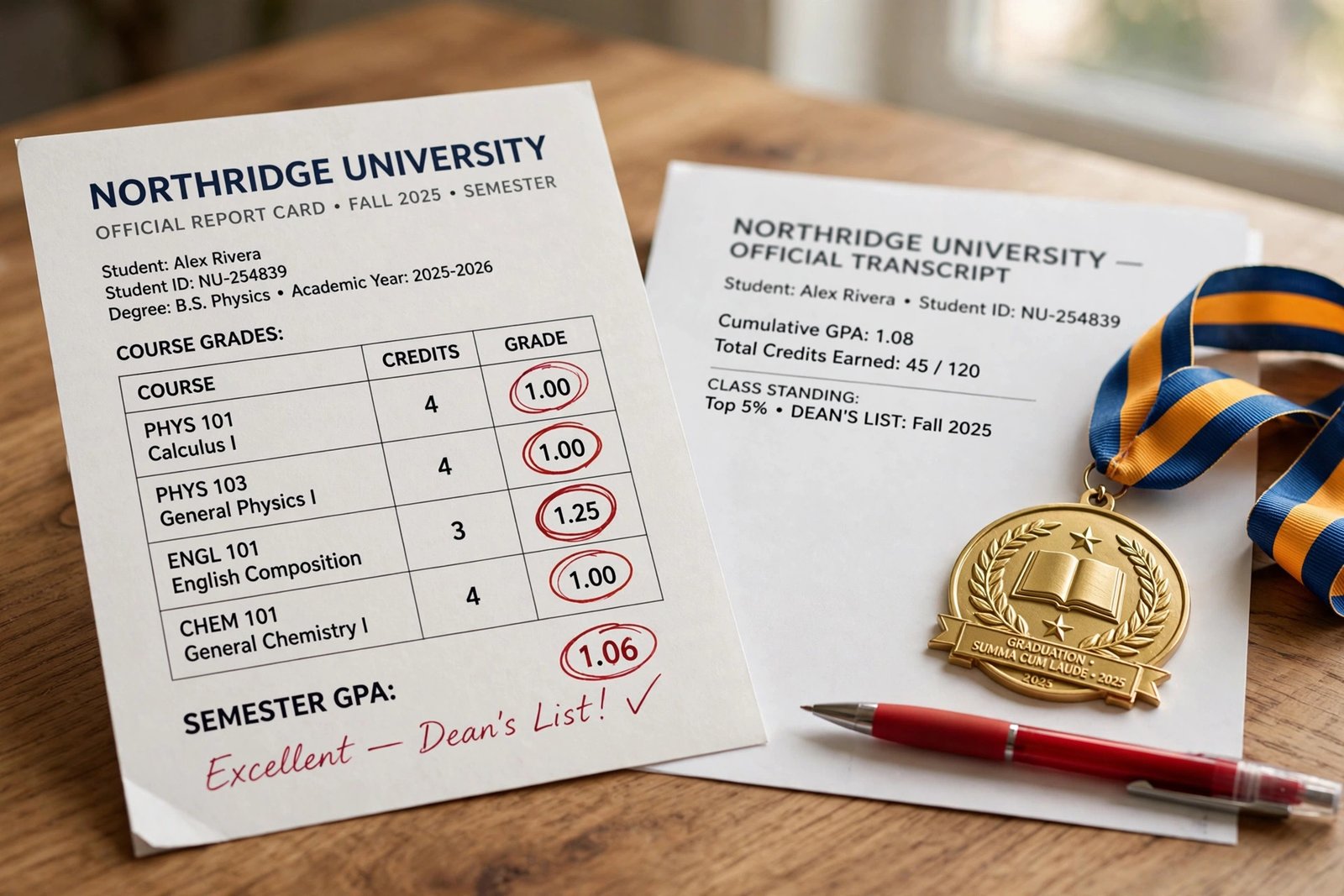
The Exact GWA Cutoffs for PUP Latin Honors
These are the ranges published in the PUP Student Handbook (Section 15, Graduation with Honors):
| Honor | GWA Range |
|---|---|
| Summa Cum Laude | 1.0000 – 1.1500 |
| Magna Cum Laude | 1.1501 – 1.3500 |
| Cum Laude | 1.3501 – 1.6000 |
Two things worth knowing. First, PUP computes to four decimal places — a 1.1501 and a 1.1500 are genuinely different outcomes (Magna vs. Summa), so rounding in your favor doesn’t happen.
Second, handbook editions get revised; if you’re reading this close to your graduation year, confirm the current ranges with the University Registrar. The structure above has been stable for years, but “the registrar said so” beats “a website said so” every time.
For context on how PUP’s system compares with the national standard, my breakdown of the PUP grading system covers the full 1.00–5.00 scale and what each grade point means.
Who Actually Qualifies: The Rules Beyond the Average
This is the part that ends more Latin honor dreams than the GWA cutoff itself. Per the PUP Student Handbook, a candidate must satisfy all of the following:
1. No grade below 2.5 in any subject. One 2.75 in PE freshman year — even in a non-academic subject — disqualifies you. This surprises more students than anything else on this list.
2. No incomplete (INC), dropped, or withdrawn grades. That INC you planned to complete “next sem” counts against you permanently for honors purposes.
3. No failing grade (5.0) anywhere. Obvious, but it includes subjects you later retook and passed. The original 5.0 stays on the record.
4. Finish within the prescribed period. Delayed graduation — even by one semester, even for valid reasons — removes you from consideration.
5. Carry the prescribed academic load. Underloading semesters to protect your average can backfire if it violates the load requirement.
6. Only academic subjects count in the GWA. NSTP and similar non-academic subjects are excluded from the computation (though the “no grade below 2.5” rule still applies to them).
7. Residency matters. Transferees from outside the PUP system are disqualified from graduating with honors. Students from PUP branches and satellite campuses keep their eligibility. Shifters within PUP can still qualify if they meet the academic and residency requirements.
8. Clean record. No misconduct or misbehavior on record, and no unsettled financial accountabilities with the university.
Read that list twice. Every year, students with a 1.30 average discover in their final semester that a dropped subject from second year already ended their Magna hopes. The GWA gets you in the door; the rules decide whether you stay.

How to Compute Your GWA for PUP Latin Honors
The formula is the standard Philippine GWA computation: multiply each subject’s grade by its units, add all the products, divide by total units. Only academic subjects prescribed in your curriculum are included.
Worked example. Say your final-year first semester looks like this:
- Subject A: 1.25 × 3 units = 3.75
- Subject B: 1.50 × 3 units = 4.50
- Subject C: 1.00 × 2 units = 2.00
- Subject D: 1.75 × 3 units = 5.25
- Subject E: 1.25 × 1 unit = 1.25
Total: 16.75 grade points ÷ 12 units = 1.3958 GWA — which falls in Cum Laude’s 1.3501–1.6000 range. See how easy it is to misread your own standing?
One 1.75 in a 3-unit subject pulled this semester from Magna into Cum Laude territory. That’s why you compute; you don’t guess.
Don’t want to do this by hand across eight semesters? Use the free GWA calculator — enter all your grades and units once and it gives you the exact weighted average.
If you’re converting between systems first, the GWA to percentage converter handles that step. And if you want the full method explained from scratch, my complete guide to computing GWA walks through every variant.
Why PUP’s Cutoffs Are Tougher Than Most Schools
For perspective: many Philippine universities set Summa at 1.00–1.20 and Cum Laude up to 1.75. PUP’s Summa ceiling of 1.1500 is stricter than the common 1.20 — at PUP, a 1.18 is “only” Magna, while elsewhere it would be Summa. And PUP’s Cum Laude floor stops at 1.60, where other schools stretch to 1.75.
This isn’t PUP being difficult for its own sake. PUP is the country’s largest state university, and its Latin honors signal something specific to employers: this graduate survived one of the toughest grading environments in Philippine higher education.
When a PUP Summa walks into a job interview, that 1.10 means more than the same number from a school with gentler curves. The difficulty is the value.

5 Realistic Ways to Protect Your GWA Starting Now
1. Treat 2.5 as a failing grade. Since anything below 2.5 kills your honors eligibility outright, your real passing bar isn’t 3.0 — it’s 2.5. Plan your effort around that line, especially in subjects you find boring.
2. Never take an INC if you can avoid it. An incomplete feels like a pause button; for honors purposes it’s a disqualification. Exhaust every option — special exams, grade appeals, talking to the professor — before accepting one.
3. Weight your effort by units. A 3-unit major subject moves your GWA three times more than a 1-unit subject. When two deadlines collide, the math tells you which one to prioritize.
4. Compute your running GWA every semester. Don’t wait until senior year to discover you’re at 1.62. Knowing your number each term turns “I hope I qualify” into “I need a 1.40 average across my remaining 24 units” — a plan instead of a wish.
5. Guard freshman year. Adjustment-period grades count exactly as much as senior-year grades in the final average. The students who miss Cum Laude almost always trace it back to first year.
PUP Latin Honors FAQ
What GWA do I need for Cum Laude at PUP?
A GWA between 1.3501 and 1.6000, with no grade below 2.5, no INC/dropped/withdrawn subjects, graduation within the prescribed period, and the other handbook requirements.
Can transferees graduate with Latin honors at PUP?
Only transferees from PUP branches and satellite campuses. Students transferring from outside the PUP system are disqualified from graduating with honors, regardless of their GWA.
Does PUP round off GWA for Latin honors?
PUP computes to four decimal places, and the published bands have hard boundaries (e.g., 1.1500 vs. 1.1501). Don’t count on rounding to push you into a higher honor.
Are NSTP grades included in the Latin honors GWA?
No — only academic subjects are included in the computation. However, the “no grade below 2.5” disqualification rule still covers non-academic subjects.
How is PUP’s Summa different from other universities?
PUP’s Summa Cum Laude ceiling (1.1500) is stricter than the 1.20 used by many Philippine universities, and its Cum Laude floor (1.6000) is tighter than the common 1.75. A PUP Latin honor represents a genuinely tougher standard.
The Bottom Line
PUP Latin honors come down to two things: a GWA inside the published bands (1.0000–1.1500 Summa, 1.1501–1.3500 Magna, 1.3501–1.6000 Cum Laude) and a clean compliance record across every rule above. Most students focus only on the average and get blindsided by the disqualifiers — now you won’t be one of them.
Compute your running GWA today with the free GWA calculator and see exactly where you stand. If you’re within striking distance, every semester from here is just execution.